
Branded Merch Strategy: Why the Best Brands Show Up 365 Days a Year
Absolut Vodka, Patagonia, and Nike don't wait for awareness months to connect with their communities. Here's what their branded merch strategy can teach every business about building brand loyalty year-round.
Barbara Hobart
6/2/20266 min read
Every Brand Has a Community. The Best Ones Never Stop Showing Up.
What Absolut Vodka, Patagonia, and Nike can teach every business about branded merch strategy, brand loyalty, and showing up 365 days a year.
Slapping a rainbow on a product in June is not a branded merch strategy.
Why do some brands build deeper loyalty than others?
It isn’t budget. It isn’t reach. It’s consistency of commitment — expressed through products, partnerships, and physical presence that never disappear. Here are three brands that prove exactly what that looks like in practice.
Absolut Vodka: what 40+ years of branded merch strategy looks like
In 1981, Absolut Vodka placed one of the first national brand advertisements in The Advocate, an LGBTQ+ publication — at a time when doing so was considered risky for a mainstream brand. According to Absolut’s own timeline, that single decision marked the beginning of a commitment that has never stopped.
The branded merch lesson: When your values are expressed through a physical product, they don’t disappear when the algorithm moves on. A digital post has a lifespan of hours. A well-chosen branded product lives on a shelf, walks through a neighborhood, and sits on a desk for years. That’s what Strategic Swag does — the right branded product, chosen with intention for the right community — that no digital ad can replicate.
Patagonia: how to build brand loyalty through branded merchandise
Patagonia didn’t wait for Earth Day to care about the environment. Since 1985 — more than four decades ago — the brand has pledged 1% of annual sales to environmental causes. According to Patagonia’s own environmental commitment page, that pledge has resulted in over $140 million donated to grassroots environmental organizations worldwide.
The branded merch lesson: When your branded merchandise is a genuine expression of your values — not just a logo on a product — it becomes a badge your community wants to wear. That’s the difference between branded swag and Strategic Swag. One gets thrown in a drawer. The other builds brand loyalty you can hold in your hands.
Nike: what happens when your branded merch strategy never takes a day off
The branded merch lesson: When your community identity is clear, consistent, and built into everything you produce, your branded merch doesn’t need an occasion to be relevant. It’s always relevant.
How does branded merchandise build brand loyalty?
A digital post disappears when the algorithm moves on. A physical branded product doesn’t.
Small businesses and major brands alike make the same branded merch mistake: creating products that only come out when the calendar tells them to. The brands that build lasting brand loyalty create Strategic Swag that works year-round — in January just as much as June.
How do I create branded merch that builds genuine community loyalty?
Here’s the branded merch strategy framework I use with clients:
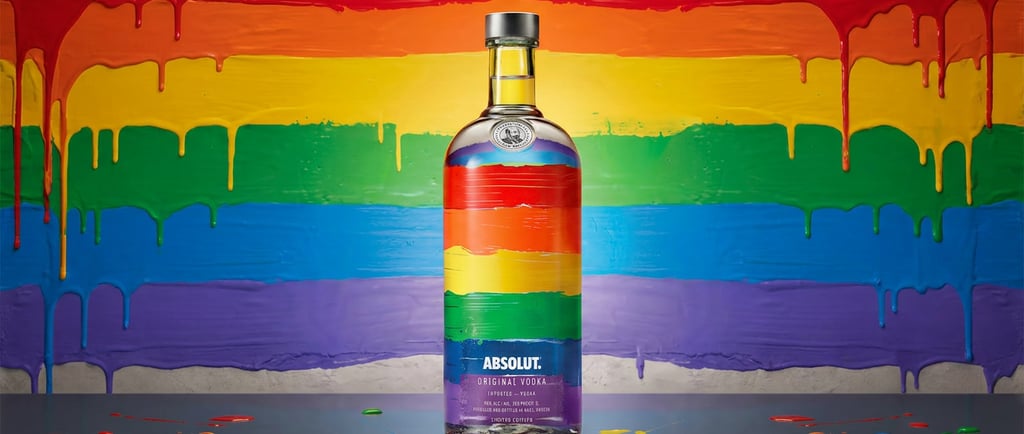
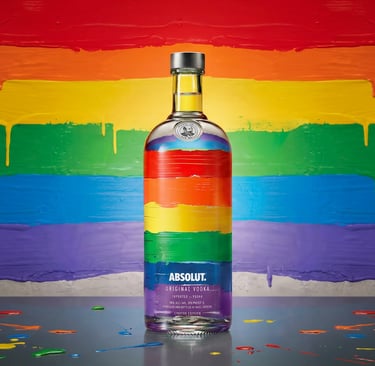
1. Identify your community before you choose a product. Not because of an awareness month. Because of who you actually serve, support, or stand alongside. Absolut didn’t put a rainbow on a bottle because it was June. They did it because they had been standing with the LGBTQ+ community since 1981. That history is what made the product credible. Community alignment always comes before product selection.
2. Choose branded merch that reflects your community, not just references it. There’s a meaningful difference between putting a logo on a product and creating Strategic Swag that genuinely reflects the values, aesthetics, and visual language of a community. One is a giveaway. The other is a brand asset. Work with designers who understand the community you’re serving. Take the time to get it right.
3. Build your branded merch strategy for year-round visibility. Your community-specific branded merchandise should be findable and available in January just as much as June. It should live in your client gift strategy, your event activations, your onboarding touchpoints — not just appear during awareness season and disappear.
4. Think physical. Think permanent. A well-chosen branded product sits on a desk, walks through an airport, and tells your brand story long after the moment that created it. That’s the compounding power of Strategic Swag — it keeps working for your brand long after a digital ad has expired.
Ready to build a branded merch strategy that works year-round?
Start at barbarahobart.com or join me in Create Kickass Merch, my private community on Skool — where I teach the exact frameworks I use with clients to build Kickass Merch that delivers brand loyalty, visibility, and revenue that sticks.
If you want to build a Signature Product for your brand, let's make that happen. Contact me here.
I just launched two new communities:
One is where I share merch ideas, product examples, worksheets, and strategy you can actually use before you spend money on merch nobody wants. Join me here.
The other is for anyone who wants their own done-for-you merch store — without setup fees, monthly fees, inventory, or shipping headaches. Join me here.
SOURCES
Absolut Vodka — Leading with Pride — www.absolut.com/en-us/leading-with-pride/
Patagonia — 1% for the Planet — www.patagonia.com/one-percent-for-the-planet.html
Nike “Just Do It” market share data — Harvard Business Review via Campaign Asia
You didn’t come this far to stop
Creating Kickass Branded Merch since 1994.
30 years. Over 1M+ products created. Generating millions in measurable revenue for my clients.
Sign Up & Get My Strategic Swag Newsletter:
© 2026 Barbara Hobart. All rights reserved.
Follow me:
Join my FREE community Get Your Merch Made